If Beverly Hills is the glossy postcard, Pico Robertson is the handwritten note in the margin, lived-in, deeply local, and absolutely obsessed with good food.
Pico Robertson in a Bite
Named for its two main arteries, Pico Boulevard and Robertson Boulevard, this Westside neighborhood sits between Beverly Hills, Beverlywood, and Carthay. Over the last century it’s evolved into the epicenter of Jewish life on the Westside, home to dozens of synagogues, day schools, and more than thirty kosher restaurants, markets, and bakeries packed into a walkable mile and a half.
On weekdays, Pico is a busy commercial strip. On Friday afternoons, the pace shifts: challah lines spill out of bakeries, last-minute shoppers rush through kosher markets, and then, as Shabbat begins, the streets grow quiet and you see families walking to and from synagogue instead of cars. Locals often describe it as feeling “a little like Israel” in the middle of Los Angeles.
A (Very) Quick History
German Ashkenazi Jews began settling near Pico in the 1910s, back when the boulevard was still a dirt road leading out to the farms and oil fields on the way to Santa Monica.
After World War II, more Jewish families moved in, drawn by nearby 20th Century Fox (now Fox Studios) and the chance to live near work and community. By the 1980s, a growing Modern Orthodox and Persian Jewish population transformed Pico Robertson into a dense hub of synagogues, schools, and kosher businesses, a “kosher corridor” unlike anywhere else in Los Angeles.
Today, Pico Robertson is still evolving: classic institutions sit right next to inventive new spots, and you can feel that mix of tradition and reinvention with every block.
The Kosher Corridor: Pico & Robertson
Walk the stretch of Pico between roughly Doheny and La Cienega, and almost every storefront is a story: Israeli falafel joints, shawarma counters, pizza by the slice, sushi bars, steakhouses, and bakeries perfumed with vanilla and yeast.
A local dining guide counts a growing roster of kosher spots serving everything from American comfort food to Chinese, Japanese, Mexican, and Italian, plus an entire sub-category of bakeries and dairy cafés.
This isn’t just convenient for locals who keep kosher; it’s also a dream for anyone who loves trying different cuisines block by block.
Meat Lovers’ Row: Jeff’s Gourmet & Friends
If there’s a single restaurant that captures the spirit of Pico Robertson, it might be Jeff’s Gourmet Sausage Factory, a glatt-kosher institution since 1999. Jeff Rohatiner turned his sausage-making hobby into a neighborhood landmark, serving house-made sausages, burgers, and deli meats that have earned write-ups from Eater and the Jewish Journal, and even their own stand at Dodger Stadium.
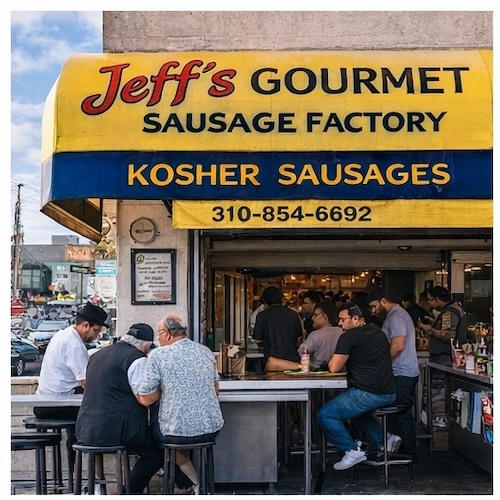
On any given day you’ll see yeshiva students, young families, and local office workers crowding the sidewalk tables over Tunisian burgers, pastrami specials, and piles of fries. It’s casual, loud, and exactly as fun as it sounds.
A few doors away, Shiloh’s offers a different vibe: a kosher steakhouse known for business-casual dinners, date nights, and celebratory meals. Think ribeye, lamb chops, and classic sides in a white-tablecloth setting that still feels very neighborhood.
Together, they show two sides of the same story: this is a community that takes meat seriously, from street-level sausages to special-occasion steaks.
New-School Flavor: Lenny’s Casita & the Next Wave
Pico Robertson isn’t stuck in the past. One of the newer arrivals, Lenny’s Casita, started life as a ghost kitchen and grew into a full-service Kosher Mexicali restaurant and bar on Pico. Chef Lenny draws on fine-dining experience to turn out brisket burritos, potato empanadas, and hard-shell beef cheek tacos, all washed down with thoughtful tequila and mezcal cocktails.
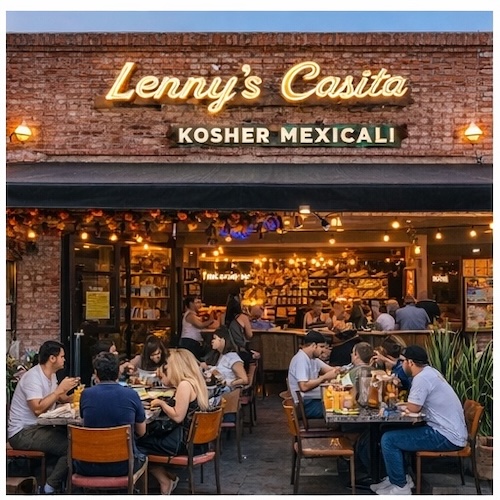
Inside, the energy is young and lively, Israeli music on the speakers, bright colors, and an atmosphere that feels more like a party than a strictly “religious neighborhood” spot. It’s a perfect illustration of what Pico Robertson is becoming: tradition plus creativity, side by side.
Bakeries, Bagels & Dairy Cafés
If you have a sweet tooth (or a carb habit), Pico Robertson is dangerous in the best way.
- Bibi’s Bakery & Café is a beloved dairy spot for shakshuka, bagel sandwiches, and trays of rugelach, ideal for a quick breakfast or casual lunch.
- Schwartz Bakery, operating since the 1950s, has grown into a multi-location institution and recently expanded into Schwartz’s Deli & BBQ, layering smoked meats and sandwiches onto its bakery legacy.
- Delice Bakery brings a full French patisserie vibe to Pico, turning out croissants, entremets, layered cakes, and brunch plates, all under strict kosher supervision. It’s basically a little corner of Paris in the middle of the corridor.
- Classic Le Palais Pastry specializes in custom and celebration cakes, from strawberry shortcake to glossy fruit tarts, fueling Shabbat dinners and simchas all over the neighborhood.
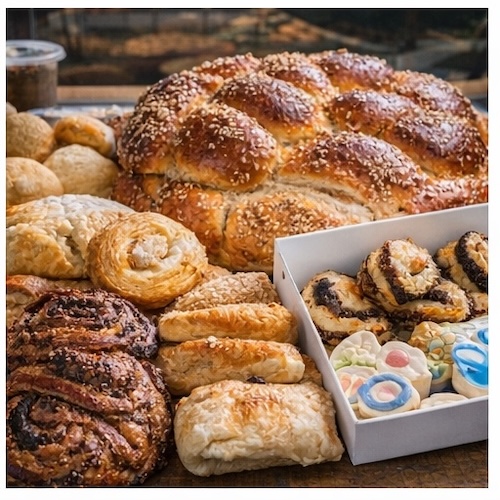
On Friday mornings, lines at these spots can stretch out the door as people pick up challah, babka, and cakes for Shabbat. The air smells like butter, yeast, and sugar, and half the fun is people-watching while you wait.
Markets & “Kosher Costco”: Koshco
For groceries, Pico Robertson has long been packed with kosher markets, but the newest headline-grabber is Koshco, a bulk, membership-free glatt-kosher supermarket cheekily styled as a “Costco dupe.”
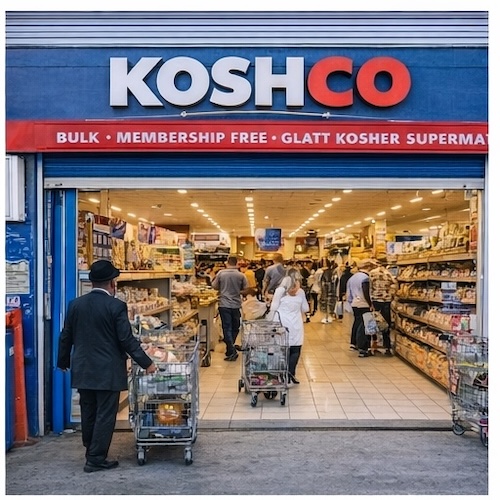
Here you’ll find towering pallets of staples, Israeli snacks, smoked fish, deli meats, and a food-court-style takeout counter serving hot meals, sushi, and baked goods, all in a setting designed for sampling and stock-ups. It started as a delivery service during the pandemic and quickly became a neighborhood anchor once it opened its physical store.
For residents, it’s part grocery run, part social hour, you’re as likely to bump into your neighbor in the rugelach aisle as you are at synagogue.
Culture, Community & the Museum of Tolerance
Beyond the food, Pico Robertson is dense with synagogues, schools, and community institutions, more than twenty synagogues and multiple day schools within a short walk, according to local histories.
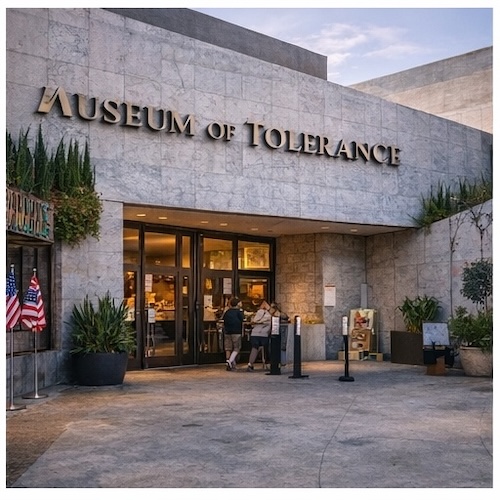
One of the most significant landmarks is the Museum of Tolerance, a multimedia museum and education center operated by the Simon Wiesenthal Center. Its exhibits, including a powerful Anne Frank experience, focus on the Holocaust and contemporary issues of racism and prejudice, drawing millions of visitors since opening in 1993.
On Shabbat and holidays, the neighborhood truly changes character: cars thin out, families and friends walk in clusters along Pico and the side streets, and front doors open to guests for festive meals. Longtime organizations like the Jewish Deaf Community Center note that the area can feel like “a very close-knit community” where everyone knows their neighbors.
Why Pico Robertson Belongs on Your “Eats & Experience” List
Pico Robertson isn’t flashy in the way of Beverly Hills or the Sunset Strip. Instead, it’s the kind of neighborhood where everyday life, picking up challah, grabbing a quick shawarma, meeting friends at a dairy café, adds up to a rich, layered experience.
Come for:
- A walking food tour: sausages at Jeff’s, tacos at Lenny’s Casita, dessert at Delice or Bibi’s.
- A dose of culture and history at the Museum of Tolerance.
- A window into community life, especially if you visit on a Friday afternoon and watch the neighborhood gently shift into Shabbat mode.
Whether you keep kosher or just love neighborhoods where food and community are woven tightly together, Pico Robertson delivers: part global village, part old-school L.A., and entirely its own world.
Leave a Reply