
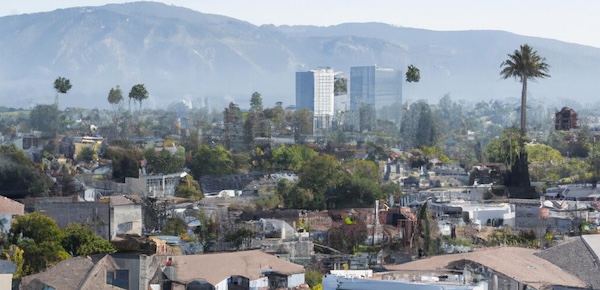
A quietly elegant Mid-City pocket of 1920s character homes, hidden architectural gems, and surprisingly central access to everything on the Westside.
Wilshire Vista is one of those Los Angeles neighborhoods that feels like a residential “island” calm streets, consistent scale, and a strong sense of community, yet it sits right in the middle of the city’s most connected zone. Tucked just south of San Vicente and east of Fairfax, the neighborhood is close to Carthay Square, Beverly Grove, Mid-Wilshire, and Museum Row, making it especially appealing to buyers who want classic L.A. architecture without giving up convenience.
Location & Boundaries
Wilshire Vista is generally described as being bounded by:
- North: San Vicente Boulevard
- South: Pico Boulevard
- West: Fairfax Avenue
- East: Hauser Boulevard
It’s also commonly associated with the larger Mid-City / Mid-Wilshire area and benefits from fast access to major corridors like La Brea, Fairfax, Olympic, Wilshire, and the 10 freeway.
The Neighborhood Feel
If you drive through Wilshire Vista, the vibe reads instantly: tree-lined streets, a cohesive stock of 1920s–1930s homes, and a “low-rise, residential-first” identity that hasn’t been overwhelmed by large-scale development. Residents often cite the combination of prime location and well-preserved Tudor and Spanish bungalow character as the magic formula.
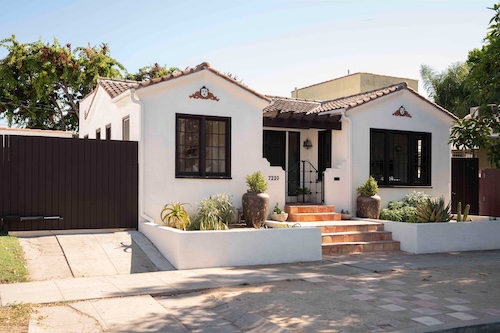
It’s quiet and neighborhood-y on the interior blocks, while edges like Fairfax, Pico, and Olympic keep you close to dining, shopping, and daily services.
A Brief History
Development momentum in Wilshire Vista accelerated in the early 1920s as Los Angeles expanded westward. The area was promoted as an accessible residential tract with proximity to the city’s growing boulevard network and institutions, very much part of the classic “streetcar-era to early auto-era” evolution of Central L.A.
Over time, Wilshire Vista became known for stable, middle-neighborhood housing, especially its richly detailed Period Revival architecture, and later for its diverse mix of residents and households.
Architecture & Housing Inventory
Wilshire Vista’s architecture is one of its biggest selling points. The neighborhood’s housing mix includes:
Single-family homes
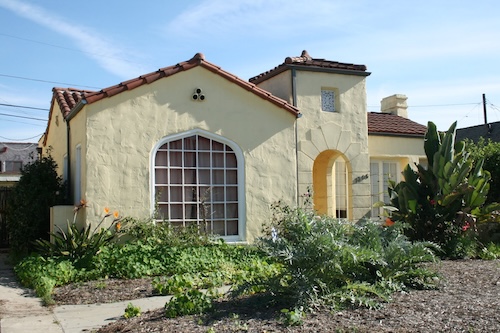
You’ll see plenty of 1920s–30s Spanish Colonial Revival and Tudor Revival houses, arched entries, clay tile roofs, textured stucco, picture windows, and compact front gardens that feel classic L.A.
Many properties have been carefully updated inside while keeping the exterior charm intact, exactly the kind of “historic look, modern lifestyle” combination buyers want today.
Multi-family classics (quietly iconic)
One of Wilshire Vista’s most interesting storylines is how gracefully multi-family housing blends into the neighborhood fabric in select pockets—courtyard apartments, duplexes, and 1930s “small income properties” that still feel residential rather than commercial.
Micro-Neighborhoods & Notable Pockets
Wilshire Vista isn’t huge, but it does have distinct sub-areas that feel different block to block.
1) Wilshire Vista West Historic District
This is a standout enclave composed entirely of two-story Period Revival multi-family residences, with a remarkably high level of intact character. It was listed as a historic district (National/California registers), and documentation notes the district includes duplexes, fourplexes, apartment houses, and courtyard apartments, typically no more than two stories.
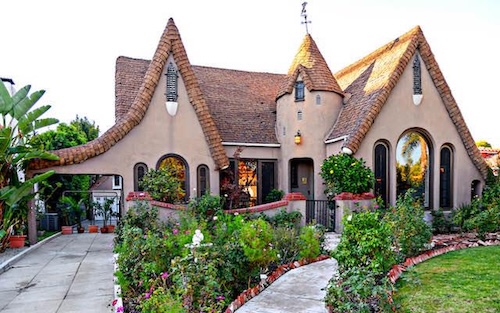
Architectural styles commonly found here include:
Mission/Spanish Colonial Revival, French Renaissance Revival, Monterey Revival, Chateauesque, Tudor Revival, Mediterranean Revival, plus compatible Streamline Moderne and Minimal Traditional examples.
Boundaries (as described in the district documentation): bounded roughly by an alley east of S. Fairfax (west edge), San Vicente Blvd (north), Spaulding Ave (east), and Packard St (south), including interior streets like Orange Grove, Ogden, Genesee, and Whitworth.
2) Orange Grove–Ogden–Genesee Multi-Family Historic District
A SurveyLA-recognized concentration of Period Revival multi-family architecture, with many examples of Spanish Colonial Revival and related 1930s–40s styles.
If you love “old Los Angeles” courtyard living, this pocket is the neighborhood’s hidden gold.
3) Wilshire Vista Heights (International Style surprise)
Just outside Wilshire Vista proper (but closely linked in local identity), Wilshire Vista Heights is home to one of the most architecturally important small-scale modern housing projects in Los Angeles:
Dunsmuir Flats (Gregory Ain, 1937–38)
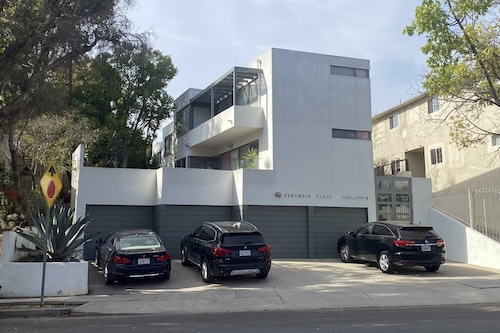
A four-unit, two-story townhouse complex that’s celebrated as an exemplary International Style multi-family building. Its stepped plan, patios, and orientation were designed for light, privacy, and cross-ventilation, years ahead of typical small-lot development.
Special Historic Locations & Landmarks
Wilshire Vista’s historic landmarks aren’t loud, they’re the kind of places architecture people get excited about.
Charlotte Chase Apartments (LA Historic-Cultural Monument #1179)
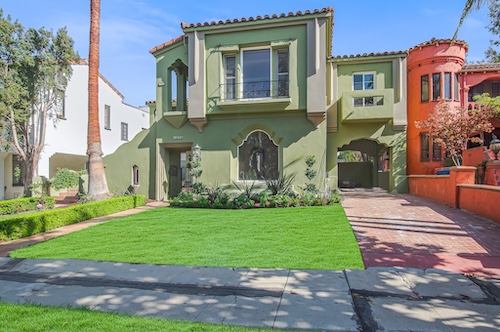
Located at 1074 S. Genesee Ave, officially recognized as a Los Angeles Historic-Cultural Monument.
Charles H. Bevis Duplex (LA Historic-Cultural Monument #1180)
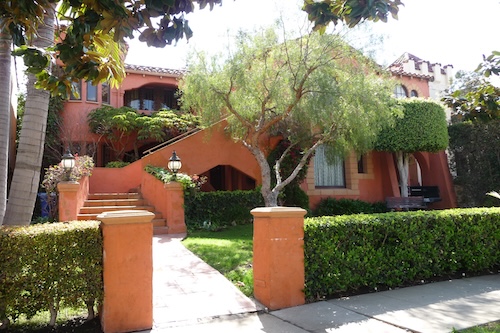
Located at 1080 S. Genesee Ave, also designated as a Los Angeles Historic-Cultural Monument and recognized for its architectural significance.
These two monuments are a perfect example of why Wilshire Vista “hits different” the neighborhood has real design pedigree, but it’s still a livable, everyday place.
Lifestyle & Nearby Amenities
One of the reasons Wilshire Vista feels so practical is how close it is to multiple “L.A. lifestyle zones”:
- Little Ethiopia on Fairfax (right next to Wilshire Vista West)
- Museum Row just north (LACMA, Academy Museum, La Brea Tar Pits)
- Easy access into Beverly Grove, The Grove/Farmers Market, West Hollywood, and the wider Mid-Wilshire district
You can live here and rotate between “casual local” and “big L.A.” in about 10 minutes.
Who Wilshire Vista Is For
Wilshire Vista tends to be ideal for:
- Buyers who want 1920s charm + central L.A. access
- People who love a neighborhood that feels quiet and residential, but isn’t isolated
- Architecture lovers (Period Revival homes, courtyard apartments, plus a real modernist landmark nearby)
- Anyone who wants quick access to fairfax dining, Museum Row, and multiple Westside corridors without being on a major boulevard
Wilshire Vista is one of those rare Los Angeles neighborhoods that quietly delivers on everything: classic 1920s–30s architecture, tree-lined streets, and a true residential feel, without giving up the convenience of being minutes from Fairfax, Museum Row, Beverly Grove, and the Westside. Whether you’re drawn to Spanish bungalows and Tudors, love the charm of courtyard apartments, or appreciate the area’s lesser-known historic landmarks, Wilshire Vista offers a timeless slice of L.A. that still feels livable, approachable, and distinctly local.
Leave a Reply