
History & Origins
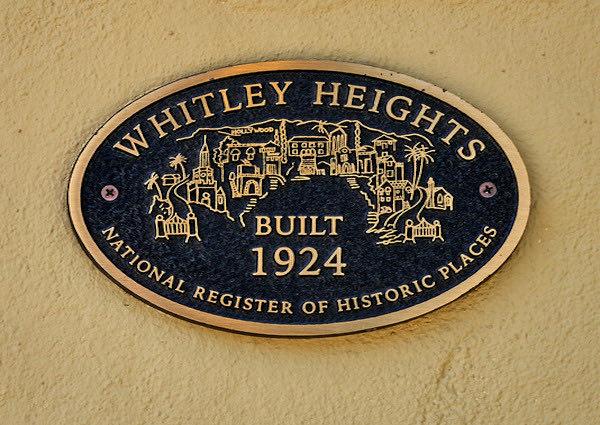
Whitley Heights is one of Hollywood’s earliest and most distinguished hillside enclaves, conceived as a residential “village in the hills” that would combine scenic beauty, architectural elegance, and proximity to the burgeoning film industry below. The area is listed on the National Register of Historic Places and is protected under a Historic Preservation Overlay Zone (HPOZ), preserving its original character and heritage.
Originally acquired by developer Hobart J. Whitley between 1901 and 1903, the land was developed into a Mediterranean-style hillside community beginning in 1918. Architect Arthur S. Barnes played a major role in shaping the architectural vision, designing many of the original homes from 1918 to 1928 with stylistic cues borrowed from hill towns in the Mediterranean. Whitley saw this area as “a magnificent hill of forty acres … overlooking the entire city.”
In 1907, a wildfire swept across the area (then covered in wild mustard and barley), damaging many of Whitley’s planted trees and threatening local water infrastructure, but local fire crews quelled the blaze before it became catastrophic.
________________________________
Boundaries & Geography
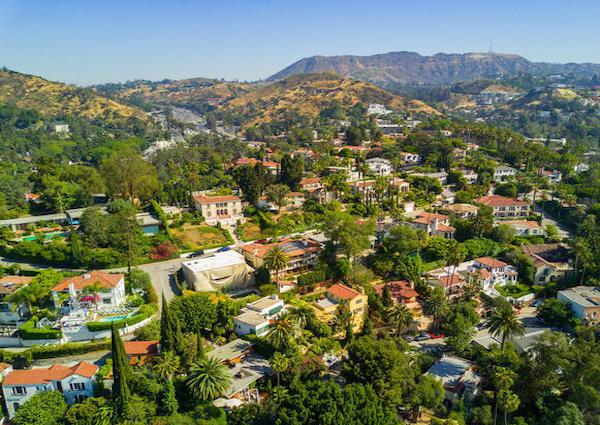
Whitley Heights is perched in the Hollywood Hills above Hollywood Boulevard. Its rough boundaries are:
South: Franklin Avenue
West: Highland Avenue
North & East: Cahuenga Boulevard
It also climbs up around Whitley Terrace, Grace Avenue, Wedgewood Place, and adjacent streets.
Its hillside terrain includes narrow, winding streets, retaining walls, stairs, and pedestrian paths that connect different levels. Some original streets were laid in 1926, and utilities were installed underground, an innovative approach for its time.
________________________________
Architectural Character & Historic Preservation
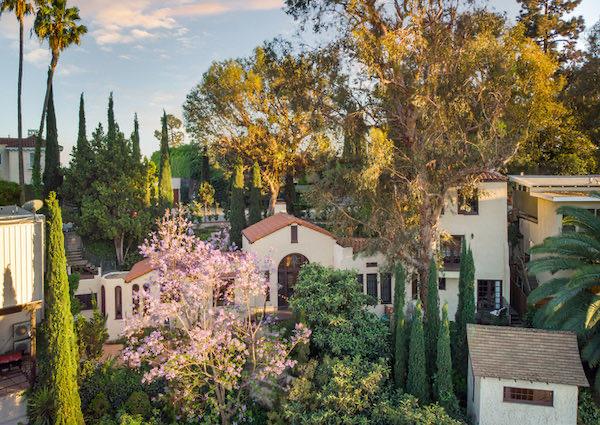
Whitley Heights was designed from its inception to evoke the ambiance of a Mediterranean village. Many homes feature red tile roofs, arched windows, wrought iron details, plaster exteriors, and cascading terraces. The neighborhood’s designation as an Historic Preservation Overlay Zone (HPOZ) means that changes to exteriors; such as gates, fences, lighting, and paint – must comply with guidelines to preserve architectural integrity.
Notably, in the 1940s, construction of the Hollywood Freeway (US 101) carved through parts of Whitley Heights, forcing the demolition of dozens of homes “some with celebrity provenance” and disrupting the original layout and views. Rudolph Valentino’s house on Wedgewood was one victim of these freeway cuts.
One example of preserved historic architecture is La Leyenda Apartments, a six-story Spanish Colonial Revival building at 1735–1737 North Whitley Avenue that dates to 1927 and was later designated a Historic-Cultural Monument.
________________________________
The Gate Controversy & Public Streets
In 1991, the Whitley Heights Civic Association obtained a permit from the City of Los Angeles to install gates that would convert a portion of the community into a private enclave, funded by homeowners to the tune of over $350,000.
However, soon after the gates were erected, a community group named Citizens Against Gated Enclaves (CAGE) filed suit, arguing the streets were public and couldn’t be closed selectively. In March 1994, an appellate court ruled in favor of removing the gates, citing California Vehicle Code Section 21101.6, which prohibits selective denial of access to public streets. The demolition of the gates and dismantling of the closures was enforced, and the attempt permanently halted.
Because the gates were installed outside the “period of significance,” the HPOZ rules now generally require removal of any non-historic fences or gates that conflict with the district’s original character.
________________________________
Historic & Notable Residents
Whitley Heights became Hollywood’s first “movie star colony” in the 1920s, attracting the golden era elite. Its seclusion, panoramic views, and architectural elegance made it a natural haven for screen legends.
Among its famous residents were:
Rudolph Valentino
W.C. Fields
Jean Harlow
Carole Lombard
Gloria Swanson
Judy Garland
Marlene Dietrich
Tyrone Power
Rosalind Russell
Barbara Stanwyck
Harold Lloyd
More recently, Francis Ford Coppola’s former home (built in 1922, later owned by his daughter-in-law and granddaughter Gia Coppola) drew attention when it was listed for sale.
The district also attracted literary and artistic figures, including screenwriters like Ben Hecht, William Faulkner, and Anita Loos.
________________________________
Culture & Lifestyle
Whitley Heights offers a unique blend of quiet hillside living and central proximity. You enjoy sweeping views across Hollywood, mature vegetation, and a village-like environment, yet you’re minutes from Hollywood Boulevard, Sunset Strip, and major studios.
Residents often mention walking to the Hollywood Bowl, exploring local staircases, or strolling vintage streetscapes. One resident on a forum noted the “beautiful historic apartment buildings and houses, especially north of Franklin,” and the ease of foot traffic to nearby amenities.
Due to its status as an HPOZ and the gate litigation, Whitley Heights is often cited as an example of how communities balance historic preservation, civic access, and neighborhood character.
________________________________
Market Appeal & Legacy
Whitley Heights remains one of Hollywood’s most romantic and prestigious hillside enclaves.
Buyers and admirers are drawn to:
- Architectural legacy and preservation of Mediterranean-village aesthetic
- Historic provenance and a direct link to Hollywood’s Golden Age
- Views, seclusion, and hillside character within immediate reach of major cultural corridors
- The intact HPOZ protections that guard against out-of-scale alteration
- A story-rich environment where every façade and street has meaning
Leave a Reply