
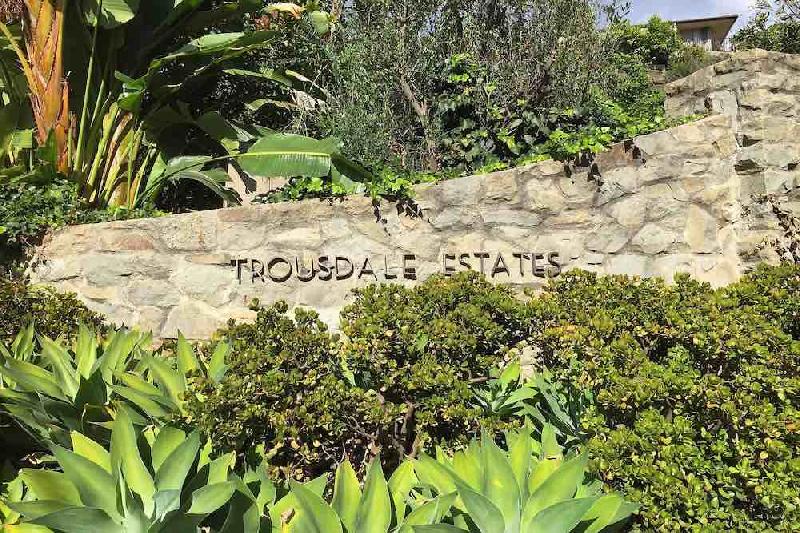
There are hillside neighborhoods in Los Angeles with views, and then there’s Trousdale Estates, an elevated shelf above Sunset Boulevard where the view isn’t just scenery; it’s the organizing principle. Here, architecture has long been engineered to frame the city like cinema: glass walls aimed at the skyline, terraces aligned to the horizon, and low rooflines that keep the experience horizontal, serene, and quietly theatrical.
Trousdale’s reputation as one of Beverly Hills’ most exclusive addresses isn’t an accident of celebrity or real estate marketing. It’s the outcome of deliberate planning, an unusually cohesive marriage of subdivision design, strict development standards, and a modernist ideal that turned “indoor-outdoor living” into a polished, consistent neighborhood identity.
What follows is a publish-ready guide to Trousdale Estates: how it was made, why it looks the way it does, who shaped it, and which homes helped define its legend, architecturally, culturally, and lifestyle-wise.
A Neighborhood Built on a Bigger Estate Dream
From old Beverly Hills wealth to a new kind of modern prestige
The land that became Trousdale Estates is closely tied to Beverly Hills’ earlier era of grand estates, most famously the Doheny family legacy and the Greystone Mansion sphere. By the mid-20th century, the future of this hillside terrain shifted from “one estate” to “many masterpieces.”
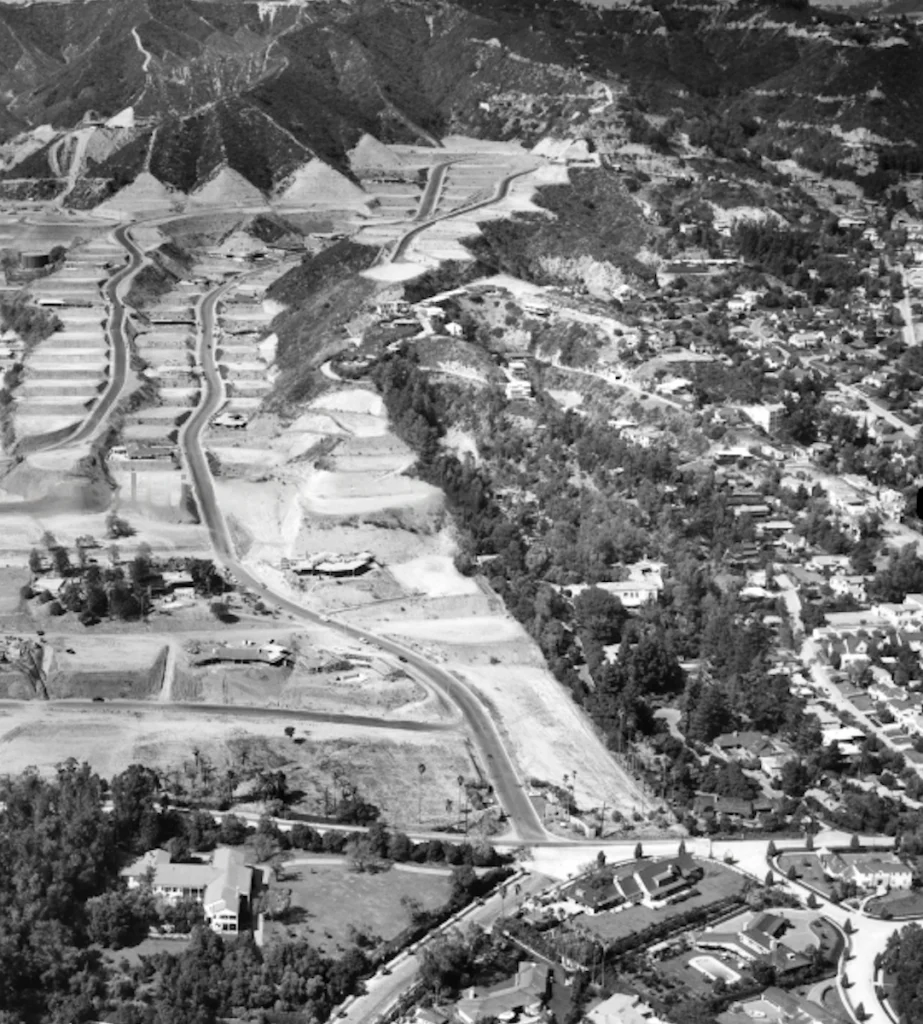
In the 1950s, developer Paul Trousdale assembled and repositioned the property and drove a bold plan: create a luxury residential enclave that would feel private and rare, but also unmistakably modern. He didn’t just sell lots; he sold a concept, sleek single-story living, protected sightlines, and a uniform sense of design discipline that would distinguish Trousdale from the more eclectic hillsides nearby.
A curated modernist subdivision
Trousdale Estates wasn’t marketed as a loose patchwork of custom homes. It was presented as an idea made physical: glamorous, contemporary, and deliberately restrained from the street, homes that reveal themselves from within, not from curb appeal theatrics.
A supervising-architect / design review framework helped preserve the neighborhood’s architectural tone in the early years, and over time, Beverly Hills codified the principles that made Trousdale “Trousdale”: limits on height and massing, attention to view impacts, and evolving rules designed to protect the neighborhood’s low-slung profile.
Why Trousdale Looks Like Trousdale
The essential “Trousdale formula”
If you’ve toured enough homes here, you begin to recognize the choreography:
- Privacy first: A discreet street presence – walls, hedging, controlled arrival.
- Reveal second: A pivot to the inside – courtyard, gallery-like hall, or a sudden view corridor.
- The view wall: Expansive glazing that turns Los Angeles into a moving mural.
- Terrace living: The house extends outward – pool decks, dining terraces, conversation pits, and outdoor rooms that feel as intentional as the interiors.
This is modernism designed not as austerity, but as comfort: calm lines, easy flow, and spaces that hold art, entertaining, and expansive living without visual noise.
The power of the plateau

Trousdale’s physical geography matters. Many lots sit on relatively broad, graded pads compared with steeper hillside neighborhoods. That condition encouraged single-story footprints and generous indoor-outdoor transitions, one reason the neighborhood became a showcase for mid-century California living at its most refined.
A design legacy reinforced by regulation
Trousdale’s visual continuity is also protected by ongoing oversight, particularly height and view-related standards. While homes have evolved dramatically over time, the neighborhood still signals a consistent profile: horizontal architecture, controlled verticality, and a careful relationship between structure and skyline.
The Architects Who Defined the Trousdale Era
Trousdale Estates is often described as a mid-century museum without velvet ropes, a neighborhood where major design talent helped shape the archetype of the modern LA luxury home.
Names most frequently associated with Trousdale’s architectural story include:
- Wallace Neff – a bridge between classic Hollywood elegance and modern California living
- Paul R. Williams – refined glamour, proportion, and prestige
- A. Quincy Jones – disciplined modernism, clarity of plan, and view-forward design
- Hal Levitt – “glamour modern,” ideal for entertaining and indoor-outdoor life
- Rex Lotery – quintessential late-1950s California modern lines and livability
Trousdale’s broader mid-century ecosystem also overlaps with many of Southern California’s modernist titans, but the names above are the ones most repeatedly tied to the neighborhood’s formative identity.
Landmark Homes & Cultural Icons: Trousdale as Architecture + Myth
Trousdale isn’t only about design; it’s also about cultural memory. Certain addresses have become shorthand for a very specific LA dream: privacy, views, mid-century cool, and Hollywood adjacency.
Below are publish-friendly vignettes you can present as “Notable Homes” with optional image callouts and captions.
The “Elvis House” (Rex Lotery, 1958)
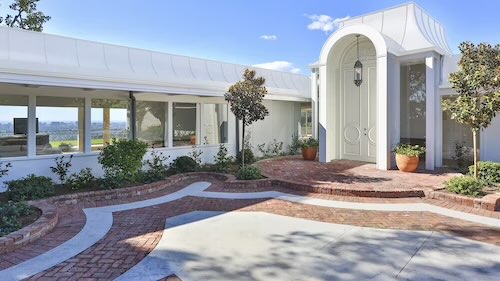
One of Trousdale’s most cited cultural-architecture crossovers is the mid-century home widely attributed to Rex Lotery and associated with Elvis and Priscilla Presley’s Beverly Hills years. Beyond the celebrity narrative, the house is a quintessential expression of the Trousdale formula: discreet from the street, open to the rear, and engineered to dissolve the boundary between interior living and view terrace. Its late-1950s modernism feels especially aligned with Trousdale’s founding ethos, privacy, clarity, and an environment designed for effortless entertaining.
The Groucho Marx / Wallace Neff Connection
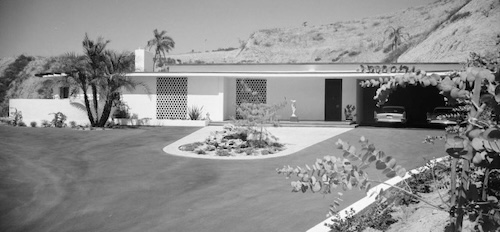
Trousdale is often framed as pure modernism, but properties attributed to Wallace Neff underline a more nuanced reality. Neff’s work, rooted in elegance, proportion, and livability adapts naturally to Trousdale’s single-story, view-forward context. This strand of Trousdale history highlights that the neighborhood’s luxury has never depended on visual loudness; it depends on planning, serenity, and a confidence that doesn’t need ornament to feel expensive.
A. Quincy Jones and the “Purist” Modernist Thread
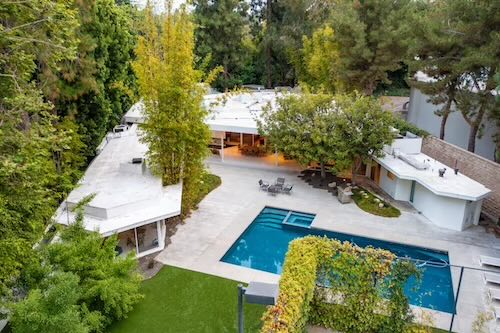
Homes attributed to A. Quincy Jones are often held up as especially “correct” examples of Trousdale living: disciplined forms, clear spatial organization, and a deep commitment to how a plan frames outdoor space and distant views. In a neighborhood where many houses have been expanded, reinvented, or replaced, Jones-linked properties carry extra weight as architectural touchstones, evidence of Trousdale’s original design ambitions at their most refined.
Hal Levitt: Glamour Modern for Entertaining
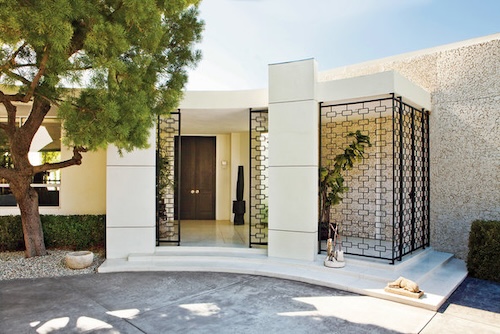
Hal Levitt’s association with Trousdale captures the neighborhood’s social spirit, mid-century architecture optimized for hosting. Levitt-era thinking often shows up in courtyard sequences, large openings that convert living rooms into terraces, and interior proportions that feel both relaxed and intentionally “camera-ready.” In Trousdale, this is not excess; it’s a lifestyle infrastructure, spaces designed to move seamlessly from cocktails to dinner to poolside conversation without sacrificing privacy or comfort.
The Dean Martin Site and the Trophy-Build Era
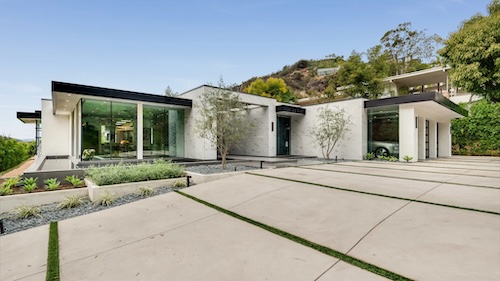
Trousdale’s story also includes reinvention. Some of the most talked-about contemporary estates occupy sites tied to iconic mid-century ownership, including the long-associated Dean Martin property history. This chapter is less about preserving a single building than preserving a standard of living: privacy-first design, a view-dominant rear elevation, and outdoor environments built as resort-caliber extensions of the home. Even when architecture changes dramatically, the Trousdale logic tends to remain: one-level living where possible, restrained street presence, and a dramatic relationship to the skyline.
The Trousdale Lifestyle: Luxury as Calm, Space, and Control
Trousdale’s luxury isn’t about ornate detailing, it’s about command of environment.
- Privacy you can feel: layered arrivals, walls, gates, and hedges that create true separation from the street
- Space that performs: open-plan entertaining rooms that don’t feel cavernous because the view and terrace define the edges
- Indoor-outdoor as a daily ritual: breakfasts on the terrace, sunset laps in the pool, nighttime city-light ambiance
- Art-friendly living: long walls, controlled daylight, clean backdrops
- A “hotel suite” home logic: bedrooms often read as private wings, not upstairs zones
For many owners, the appeal is that Trousdale offers a particular type of wellness without calling it wellness: single-level living, smooth circulation, abundant light, and a sense of quiet above the city.
Preservation vs. Reinvention: Trousdale’s Ongoing Design Debate
Trousdale Estates sits at the center of one of LA’s most enduring real estate conversations:
Do you preserve the mid-century original, or build the next trophy home?
Both impulses exist here, often side by side. The best outcomes tend to share a common respect for the neighborhood’s foundational principles:
- Keep the architecture horizontal in spirit
- Protect the view relationship (the skyline is the “inheritance”)
- Maintain privacy strategy from the street
- Build outdoor spaces that feel like rooms, not leftover yard
In Trousdale, authenticity isn’t only about year built, it’s about whether a home still behaves like a Trousdale home.
Visiting the Neighborhood: What to Look for (Even From the Street)
Even without entering a property, you can read Trousdale’s design logic:
- Low rooflines and long horizontals
- Controlled facades facing the street often quiet, even minimal
- A sense of “setback calm,” where landscaping is part of the architecture
- Streets that feel residential yet elevated near the city but above it
Trousdale is one of those rare LA enclaves that feels simultaneously intimate and global, like a private resort terrace hovering over a world-class skyline.
Why Trousdale Still Matters
Trousdale Estates remains one of Beverly Hills’ most enduring expressions of modern luxury because it was never just a neighborhood, it was a thesis. Life could be more elegant if architecture was quieter, the plan was smarter, the horizon was always present, and privacy was built in from the start.
In a city full of prestige addresses, Trousdale offers something rarer: a cohesive, elevated way of living where modernism isn’t a style choice, it’s the operating system.
Leave a Reply