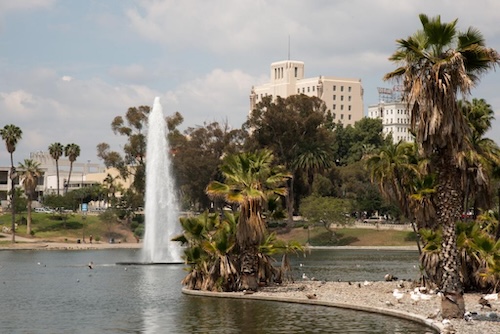
Rampart Village sits in the heart of Central Los Angeles, just south of the 101 Freeway and between some of the city’s most dynamic districts. Tucked between Historic Filipinotown and Westlake, and within minutes of Silver Lake, Koreatown, and East Hollywood, it’s a compact neighborhood with incredible connectivity and a distinctly local character.
This is a place where older courtyard apartments, modest single-family homes, and newer infill buildings coexist on tree-lined residential blocks. Diversity is part of daily life here, on any given walk you’ll pass family-run markets, coffee shops, churches, social service nonprofits, and long-time mom-and-pop restaurants serving everything from chili burgers to regional Asian and Latin American dishes. The Rampart Village Neighborhood Council describes the area as a true “crossroads of diversity,” and it shows.
Location & Boundaries
Rampart Village falls within the City of Los Angeles’ Westlake Community Plan Area, just northwest of Downtown and immediately south of the Hollywood Freeway. The neighborhood is generally understood as the area around Beverly Boulevard and Rampart Boulevard, extending toward Virgil Avenue and Hoover Street, and overlapping the busy Vermont/Beverly transit corridor.
To the north and northeast, residents are a few minutes from Silver Lake and East Hollywood; to the west, Koreatown’s restaurants and nightlife are close at hand; to the south and southwest lie Pico-Union and the greater Westlake/MacArthur Park district. This central position means most of the city’s major job centers, Downtown, Hollywood, Koreatown, and the Miracle Mile, are within a 10–15 minute drive in light traffic.
Historical Background
Long before freeways and apartment buildings, the land that now forms Rampart Village sat along El Camino Real, part of the old road system leading toward the Pueblo de Los Ángeles. Much of the area was once part of an 18th-century Spanish land grant; the rest remained public land into the mid-19th century as Los Angeles grew beyond its original plaza.
In the late 1800s and early 1900s, this “west end” of the young city began to urbanize with streetcar suburbs. Developers and boosters like Prudent Beaudry invested heavily in utilities and transit, helping to turn what had been rural outskirts into desirable residential neighborhoods. Temple Street’s cable railway, and later Los Angeles Railway and Pacific Electric streetcar lines, made the area a major transfer point, particularly around what is now the Beverly/Virgil corridor, which was once a key entertainment and recreation destination thanks to spots like the Bimini Baths and nearby dance halls and theaters.
The installation of the Hollywood Freeway in the 1950s dramatically reshaped the area, cutting through older neighborhoods and accelerating the shift from streetcar city to auto-oriented Los Angeles. Yet even with those changes, Rampart Village has remained a densely populated urban district with strong immigrant communities and a rich, if sometimes overlooked, local history.
The name “Rampart” itself is a nod to strength and fortifications, originally used for Rampart Boulevard and referencing a defensive wall or embankment, an evocative name for a neighborhood that has continually reinvented itself while holding onto its grit and character.
Architecture & Housing
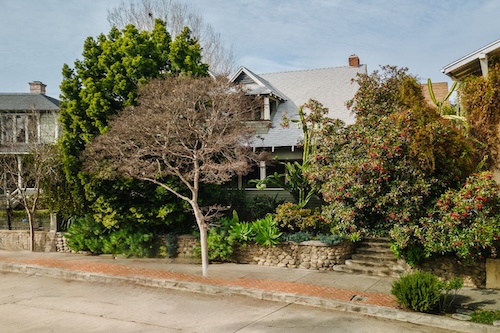
Rampart Village offers an eclectic housing mix that reflects multiple waves of Los Angeles growth. Early 20th-century Craftsman and California bungalows appear on quieter residential streets, often tucked behind mature trees. These sit alongside 1920s–1940s courtyard apartments, mid-century walk-ups, and newer contemporary low-rise and mixed-use buildings that have arrived with recent development.
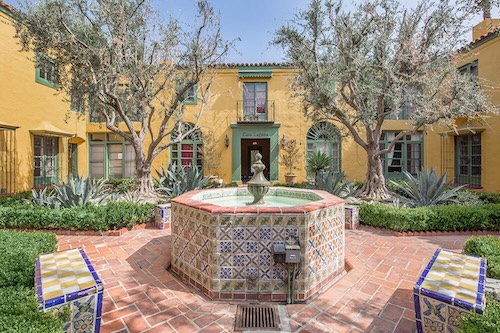
Home options range from compact studio apartments and loft-style rentals to attached townhomes and modest single-family residences. Prices vary depending on size, condition, and proximity to main corridors like Beverly and Virgil. Older income properties and more affordable condos often cluster near South Virgil Avenue, while newly renovated or ground-up contemporary units command higher prices.
Parks, Green Space & Everyday Amenities
While Rampart Village is urban and fairly dense, it benefits from access to several nearby parks and recreational spaces. Just west of the neighborhood, Lafayette Park (historically known as Sunset Park) offers lawns, sports facilities, and a recreation center, all on land donated by philanthropist Clara Shatto, who also gifted parcels for Felipe de Neve Library, nearby churches, and the tree-lined parkway along Occidental Boulevard.
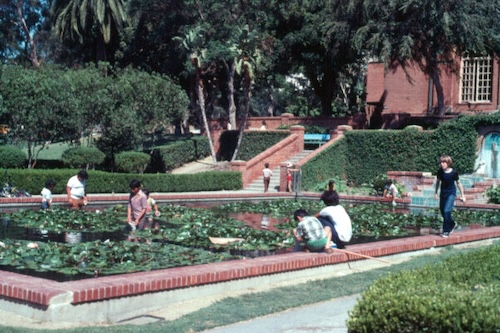
MacArthur Park and Echo Park Lake are also close, providing lakeside walking paths, playgrounds, and community events. A bit farther north, Griffith Park opens up a huge network of hiking trails, the Greek Theatre, the Observatory, and golf courses, all easily reachable by car or transit from Rampart Village.
Within the neighborhood itself, residents find day-to-day amenities sprinkled along Beverly Boulevard, 3rd Street, and nearby corridors: small groceries, ethnic markets, bakeries, laundromats, neighborhood bars, and cafés. Pet owners benefit from local veterinary hospitals and easy access to nearby dog parks around Silver Lake and East Hollywood.
Transit, Commute & Walkability
One of Rampart Village’s biggest advantages is its connectivity. Apartments.com rates the area a “Walker’s Paradise” with excellent transit, citing a high Walk Score and Transit Score thanks to frequent bus lines and close proximity to several Metro B/D Line (Red/Purple) subway stations, including Vermont/Beverly, Wilshire/Vermont, and Westlake/MacArthur Park.
Drivers enjoy near-instant access to the Hollywood Freeway (US-101), which runs along the neighborhood’s northern edge and links directly to Downtown, the Valley, and Hollywood. Beverly Boulevard and 3rd Street function as east-west spines, while Vermont, Virgil, and Hoover connect quickly to Koreatown, Silver Lake, and East Hollywood.
For residents who prefer to leave the car at home, local bus routes along Beverly and neighboring streets make it straightforward to reach Downtown, Koreatown, Hollywood, or even further afield with a transfer to Metro rail.
Community & Culture
Rampart Village’s identity today is shaped by its extraordinary diversity. The Rampart Village Neighborhood Council, certified in 2007 and representing roughly 25,000 stakeholders, emphasizes that people from “all around the world” now call the area home, creating an international district layered with schools, consular offices, social service agencies, religious institutions, and cultural organizations.
Decades of immigration from Latin America and Asia have created a vibrant mix of languages, cuisines, and traditions. Nearby Historic Filipinotown, Koreatown, and Silver Lake each leave their imprint, and the legacy of Westlake and MacArthur Park as dense, transit-served gateway neighborhoods is very much present.
You’ll find everything from small theaters and nightclubs to union halls, teaching gardens, and eco-villages within the broader Rampart Village council area, an urban patchwork that rewards curiosity and local exploration.
Landmark Bite: Tommy’s & the Chili Burger
No guide to Rampart Village would be complete without mentioning its most famous food landmark: Original Tommy’s World Famous Hamburgers. The flagship stand opened at the northeast corner of Beverly and Rampart in 1946, founded by Tom Koulax, the son of Greek immigrants.
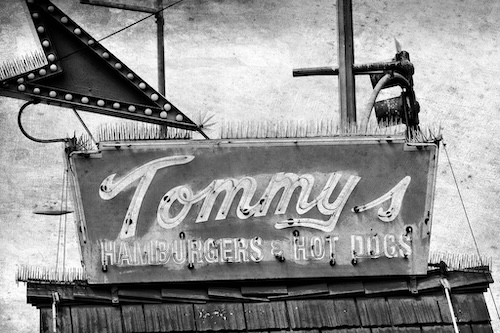
It was here that the now-iconic chili burger was born, a sloppy, chili-drenched handheld that has inspired decades of imitators across Southern California. On most days and nights, you’ll still see a line snaking from the tiny stand out toward the sidewalk, an enduring reminder that some of L.A.’s most beloved institutions are decidedly unpretentious.
Local writers and residents have even used Tommy’s as a geographic shorthand, referring to the surrounding district by the stand’s name, one more example of how food, history, and neighborhood identity intertwine here.
Who Lives in Rampart Village?
Rampart Village tends to attract:
- First-time buyers and renters looking for central city convenience at a more accessible price point than many trendier neighborhoods nearby.
- Long-time residents and multigenerational families rooted in Westlake and Historic Filipinotown who value community networks, local churches, and small businesses.
- Students and young professionals drawn by proximity to Downtown, Hollywood studios, Koreatown offices, and nearby campuses like Southwestern Law School and L.A. City College.
The result is a neighborhood that feels lived-in and authentic rather than polished or over-curated. As new projects arrive and older buildings are renovated, the challenge, and opportunity, for Rampart Village is to balance that everyday character with thoughtful growth.
Living in Rampart Village
For someone considering a move, Rampart Village offers an appealing mix:
- Central location with quick access to multiple job centers, nightlife districts, and cultural hubs.
- Diverse housing stock ranging from historic single-family homes to small condos and larger apartment communities.
- Strong transit options and high walkability, making car-free or car-light living more realistic than in many parts of L.A.
- Rich, layered history, from streetcars and early suburban expansion to today’s multicultural streetscape and legendary late-night eats
If you like the idea of living at a true crossroads, where Downtown, Hollywood, Koreatown, Silver Lake, and Echo Park are all in your orbit, Rampart Village is one of those neighborhoods that quietly makes a lot of sense. It may not be the most famous name on the map, but for many Angelenos, that’s exactly the point.

Leave a Reply