
History
Windsor Square is one of Los Angeles’ earliest planned residential communities, conceived with a vision of elegance, order, and exclusivity. In 1885, a syndicate known as the Windsor Square Land Company purchased 200 acres of the old Plummer Homestead, land bounded today by Plymouth Boulevard, Bronson Avenue, Wilshire Boulevard, and Beverly Boulevard at $400 an acre. By 1911, the property had appreciated dramatically, selling for $5,000 an acre, or $1,000,000 in total, to the Windsor Square Investment Company, led by developer Robert A. Rowan. Rowan’s firm, R. A. Rowan & Company, was selected to market the tract, setting the stage for one of the city’s most distinguished neighborhoods.
The original Windsor Square development was bounded by Irving Boulevard, Plymouth Boulevard, Third Street, and Wilshire Boulevard. It was designed with broad streets, landscaped parkways, and ornamental “electoliers” (decorative streetlights) that cost more than $200,000 to install, an extraordinary sum at the time. Each lamppost bore the distinctive “WS” insignia at its base, underscoring the tract’s identity and prestige. Streets were paved in concrete, all utilities were placed underground, and long-term deed restrictions “designed to preserve the neighborhood’s exclusivity” remained in effect until 1965. In its early years, lots sold for around $7,500 each, a considerable investment for that era.
To the west of the original tract, a separate development known as the Wilshire Hills Addition was laid out around 1913 by the Wilshire Hills Land Corporation. This area, spanning Lucerne and Arden Boulevards between Third and Fifth Streets, was developed with slightly different design choices. The boundary between Windsor Square and Wilshire Hills is still visible today: behind Plymouth and Lucerne, across Fourth and Fifth Streets, the paving changes from concrete (in Windsor Square) to asphalt (in Wilshire Hills). Street lamps also differ, metal standards in Windsor Square vs. stone in Wilshire Hills, marking the history of two distinct developers.
Location
Windsor Square is located just east of Hancock Park and west of Koreatown, within Los Angeles’ Greater Wilshire community plan area. Its boundaries are generally defined by:
North – Beverly Boulevard
South – Wilshire Boulevard
East – Plymouth Boulevard
West – Arden Boulevard
Its central position provides easy access to Downtown Los Angeles, Hollywood, Hancock Park, Larchmont Village, and the Miracle Mile.
Architectural Character
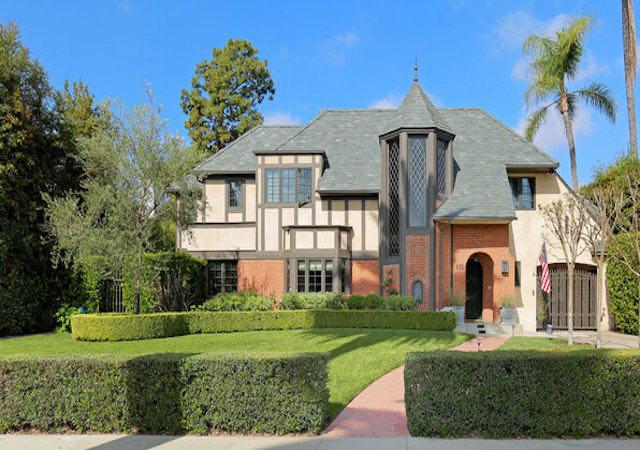
Windsor Square is celebrated for its graceful, early 20th-century architecture. Homes here represent some of the best preserved examples of Tudor Revival, Mediterranean, Craftsman, and Beaux-Arts styles, reflecting the city’s transition into a modern metropolis during the early 1900s. The community’s wide boulevards, lush landscaping, and consistent planning distinguish it from the more haphazard developments of the time, lending it the elegance of a suburban garden district in the heart of Los Angeles.
The neighborhood’s original planning innovations like concrete paving, underground utilities, generous setbacks, and signature street lamps remain defining features to this day.
Lifestyle
Known for its quiet streets, grand historic homes, and central location, Windsor Square offers residents a blend of tranquility and urban convenience. Larchmont Village, just to the west, provides boutique shopping, cafés, and a farmers market, while nearby Wilshire Boulevard connects the community to Museum Row, Koreatown, and Downtown.
Windsor Square is also home to several cultural landmarks and institutions. Most notably, the neighborhood contains the Getty House, the official residence of the Mayor of Los Angeles, further underscoring its civic and cultural significance.
Legacy and Market Appeal
Windsor Square remains one of Los Angeles’ most prestigious neighborhoods, admired for its historic pedigree, architectural integrity, and enduring charm. Large lots, leafy streets, and proximity to both cultural attractions and business hubs make it a highly coveted address. Buyers are drawn not only to the elegance of its homes but also to the legacy of a community that has stood as a symbol of refinement in Los Angeles for over a century.
Leave a Reply