
History & Origins
Atwater Village traces its roots to portions of Rancho San Rafael, which once extended over what is now Glendale and northeastern Los Angeles. In 1868, W.C.B. Richardson acquired land in the region and renamed it Rancho Santa Eulalia.
By 1902, the land that would become Atwater was subdivided and marketed to homebuilders. The name “Atwater Tract” is believed to derive from its proximity to the Los Angeles River literally “at water.” Some residents also attribute the name to Harriet Atwater Paramore, whose maiden name was Atwater, tying into early ownership narratives in the area.
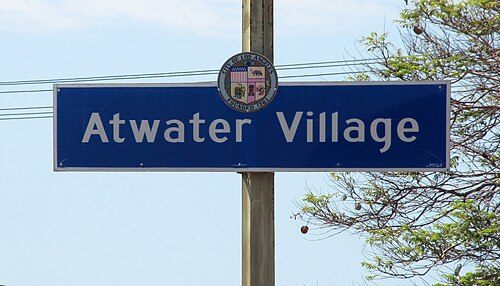
Over time, as the area developed its identity, “Village” was appended in 1986 to reflect its more community-oriented spirit.
One particularly interesting historic feature is the Atwater Equestrian Historic District, a vernacular landscape with equestrian uses, which preserves part of the neighborhood’s pastoral legacy.
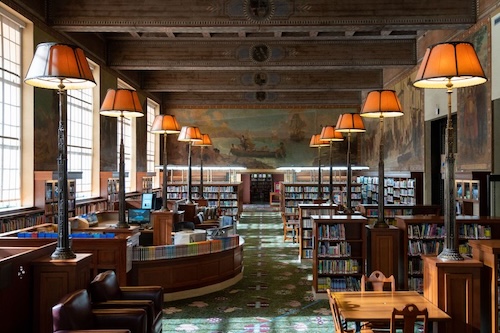
The Atwater Village Branch Library also holds a bit of history: in 1923, a small “Atwater Station” depository was housed on the campus of Atwater Avenue School. Later, in 1988–1989, a new permanent branch building was constructed and dedicated as the Atwater Village Branch Library.
________________________________
Geography, Boundaries & Infrastructure
Atwater Village lies between the Los Angeles River (west) and Glendale (north/east). Adjacent neighborhoods include Silver Lake to the south, Elysian Valley to the southeast, Glassell Park to the northeast, and Los Feliz / Griffith Park across the river to the west.
The neighborhood is partially built on the river floodplain, which has historically delivered deep, fertile soils that early gardeners and white settlers prized.
Main thoroughfares include Fletcher Drive, Los Feliz Boulevard, Glendale Boulevard, and San Fernando Road. The Golden State Freeway (I-5) runs along its west edge; the Glendale Freeway (SR-2 / SR-134 area) lies to its southeastern border.
A recent infrastructure landmark is the La Kretz / North Atwater Bridge (also called La Kretz Crossing), a pedestrian-bicycle cable-stayed bridge over the Los Angeles River linking Atwater Village with Griffith Park. Completed in 2020, it revitalized connectivity to the river and parklands.
Another nearby infrastructure element is the Glendale-Hyperion Bridge, built in 1927, which carries Glendale Boulevard across the Los Angeles River.
Because much of Atwater avoided wholesale demolition over the decades, it now hosts one of the largest concentrations of pre-1939 structures still standing in L.A. County.
________________________________
Architecture & Character
Atwater Village features a rich architectural mix: California bungalows, Spanish Colonial Revival, Tudor cottages, and storybook houses, often built between the 1920s and 1940s. Many of these original homes remain intact, lending a layered historic texture to the streetscape.
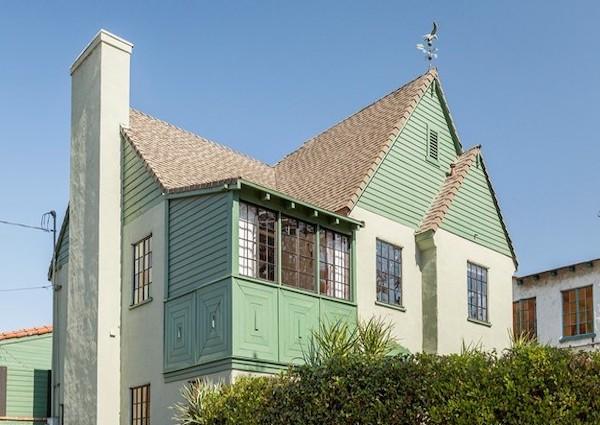
In contrast, newer infill and modern homes appear in certain corridors, blending contemporary design with historic sensitivity.
Residential streets are typically tree-lined, low in traffic, and walkable. From the east side, peeks into front gardens, modest front porches, and planted setbacks reinforce a “village in the city” ambiance.
Along Glendale Boulevard and other commercial arteries, you’ll find historic commercial buildings with revived façades, neon signs, cafés, and small shops that maintain an approachable street scale.
________________________________
Culture, Lifestyle & Community Vibe
Atwater Village combines urban amenities with a neighborly footprint. It is known for its independent boutiques, craft coffee shops, casual restaurants, and vintage retailers.
Thanks to its soil and riverside setting, gardening, urban farming, and backyard greenery are part of the local lifestyle.
Cultural spots include the Independent Shakespeare Co., the Atwater Village Theater, Ensemble Studio Theatre, and art events along the boulevard.
Atwater is also used frequently in film and TV: for example, during Pulp Fiction the neighborhood was featured (Lance’s house), and the Beastie Boys recorded significant albums at G-Son Studios in Atwater.
Every year, the community supports pop-up events, block parties (such as Glendale Blvd median tree lighting), farmers’ markets, and local music nights, reinforcing its small-town feel inside a big city.
________________________________
Connectivity & Transportation
Atwater Village is well-connected. Multiple Metro bus lines (such as 92, 94, 180) traverse the area. Its proximity to major freeways (I-5, SR-2, SR-134) makes access to the rest of the city relatively convenient. The adjacent Glendale Metrolink Station also provides regional rail access.
The new La Kretz pedestrian bridge also enhances walkable access to Griffith Park and the river corridors on the west side.
Within the neighborhood, many errands, cafés, and shops are within walking distance for residents.
________________________________
Real Estate & Market Appeal
Atwater Village appeals to buyers and renters who want a balance of historic charm, walkability, connectivity, and characterful architecture. Because so many older homes remain, the area offers vintage authenticity, not uniform new construction.
Its designation as a cultural, walkable neighborhood adjacent to the river, parkland, and surrounding creative districts, gives it added weight in market appeal.
Leave a Reply