
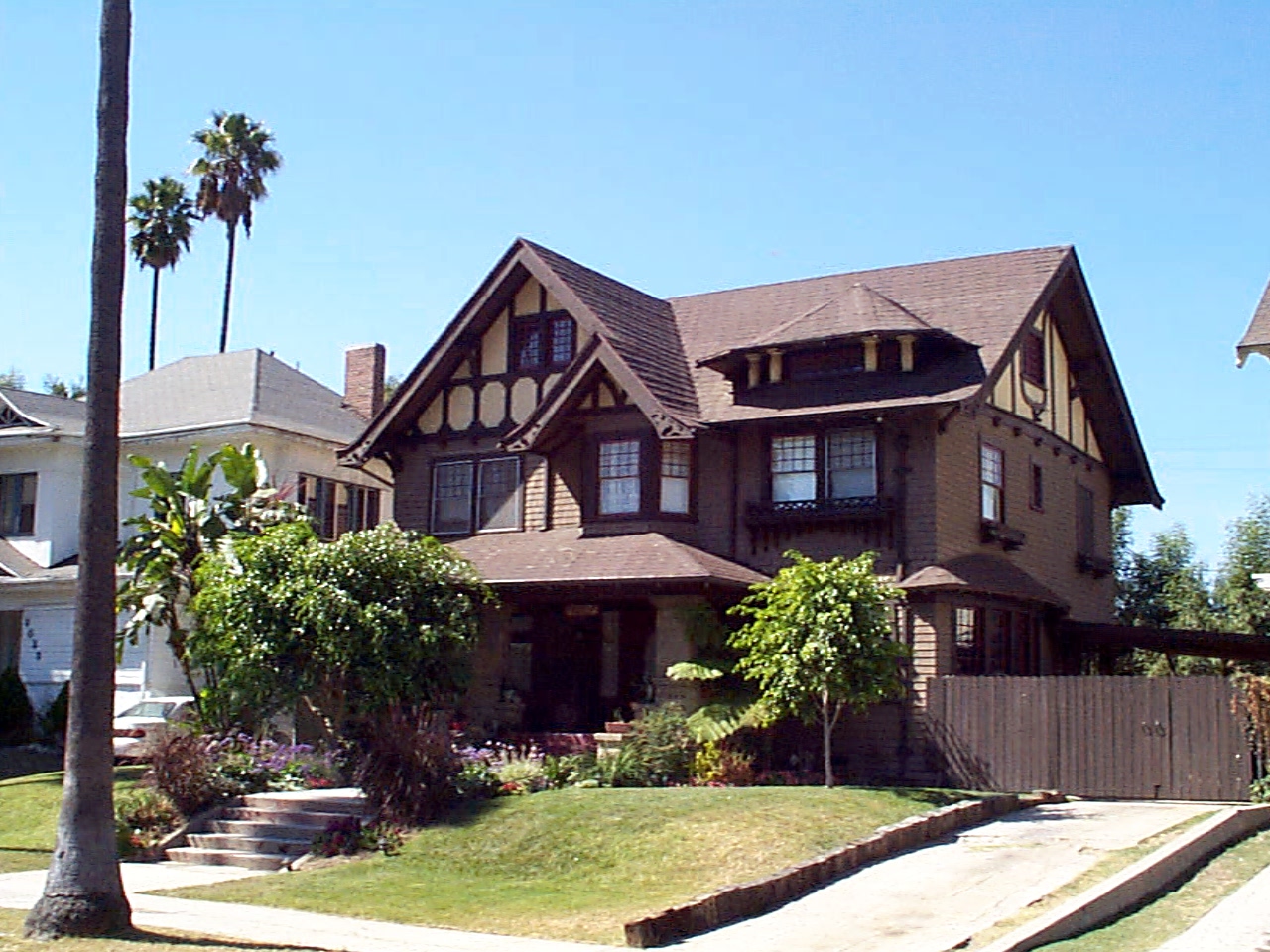
Harvard Heights is one of those Los Angeles neighborhoods that feels like a time capsule. Tucked in Mid City within the broader West Adams district, it sits on a gentle rise just southwest of Downtown and is best known for its remarkable collection of early-1900s homes and its long history of preservation and activism.
Where It Is & How It’s Defined
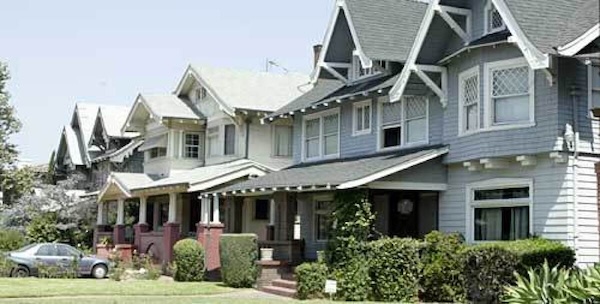
The Harvard Heights Historic Preservation Overlay Zone (HPOZ) covers 34 blocks and is one of the city’s most intact concentrations of turn-of-the-century single-family homes. The designated historic area is roughly bounded by Pico Boulevard to the north, the Santa Monica Freeway to the south, Normandie Avenue to the east, and Western Avenue to the west. Within that footprint you’ll find both Harvard Heights proper (north of Washington Boulevard) and the historic West Adams Heights / Sugar Hill area to the south.
For commuters, access is easy: you’re minutes from Downtown, the 10 Freeway, Wilshire Center/Koreatown, and the USC/Expo Park area, which is a big part of the neighborhood’s appeal.
A “Preservationist’s Dream”
City planners and preservation advocates often describe Harvard Heights as a “preservationist’s dream come true” and it’s not hard to see why. Most of the neighborhood was built between 1902 and 1910, when restrictive covenants required that homes cost at least $2,500 to build, a substantial amount at the time. That single rule helped ensure larger, more architecturally ambitious houses, many of them two stories tall with generous front porches and broad lots.
Over the decades, waves of disinvestment, subdivision, and freeway construction took their toll, but starting in the late 1990s and early 2000s, a serious restoration movement took hold. Craftsman and Arts & Crafts homes that had been chopped into rooming houses began to be painstakingly put back together, and the city formalized the Harvard Heights HPOZ in 2000 to protect the area’s historic character.
Architecture: Craftsman Grandeur & a Rare Greene & Greene
Harvard Heights is dominated by large two-story Craftsman homes and transitional designs that blend Craftsman with Prairie and Classical Revival influences. Typical interiors feature:
- Exquisite quarter-sawn woodwork and built-in cabinetry
- High ceilings and formal dining rooms
- Box-beam ceilings, picture rails, and plate shelves
- Cozy inglenooks and leaded or stained-glass windows
These are the kinds of houses that feel like real “Old Los Angeles” mansions on a human scale, often on deep lots with mature trees.
The crown jewel is the Lucy E. Wheeler House, built in 1905 by famed Pasadena architects Greene & Greene best known for the Gamble and Blacker houses in Pasadena. It’s the only remaining Greene & Greene residence within the City of Los Angeles, restored over many years by preservation architect Martin Eli Weil and now protected by historic easements.
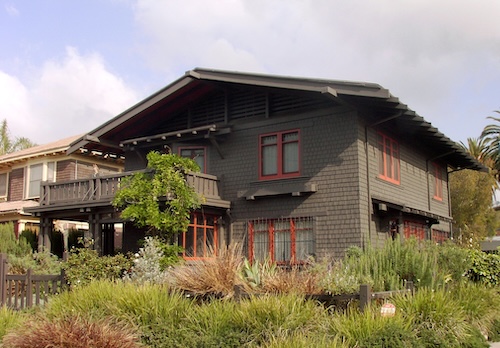
Many other homes were designed by important local architects such as the Heinemann brothers, Hunt & Eager, and Frank M. Tyler, making a simple stroll through the neighborhood feel like walking an open-air architecture museum.
Sugar Hill & the Fight for Civil Rights
The southern portion of the HPOZ, historically known as West Adams Heights and later “Sugar Hill,” carries major civil-rights significance. Developed in the early 1900s as an exclusive white enclave, the area was originally governed by racial covenants that restricted sales to “members of the Caucasian race.”
Beginning in the late 1930s, successful Black professionals, among them Norman O. Houston, co-founder of Golden State Mutual Life Insurance Company began buying homes in open defiance of those covenants. A group of white homeowners sued to try to enforce the restrictions, but the case ultimately helped pave the way for the end of racially restrictive covenants and contributed to the broader legal and cultural shift that culminated in the Fair Housing Act decades later.
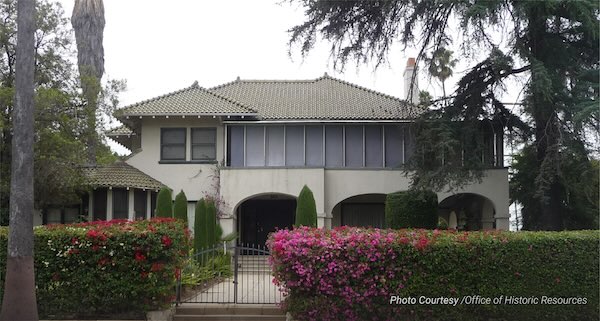
Today, the Sugar Hill section of Harvard Heights is recognized not only for its grand Arts & Crafts–influenced homes but also for its role in the fight for housing equality in Los Angeles.
Landmarks, Libraries & Fun Facts
Harvard Heights contains five Los Angeles Historic-Cultural Monuments, including the Lucy Wheeler House and a private library dedicated to legendary musician Ray Charles, established by his foundation to preserve his archives and legacy.
A few other fun details:
- The neighborhood’s intact streetscapes and rich architecture have made it a favorite filming location for television and film producers looking to evoke “classic” Los Angeles or Midwestern main-street vibes.
- Historic street trees and original concrete sidewalks still line many blocks, reinforcing the early-20th-century feel.
- Preservation files for Harvard Heights including surveys, photographs, and HPOZ advocacy documents are archived at The Huntington, reflecting how seriously local advocates have taken its restoration.
Everyday Life: Central, Historic, and Surprisingly Convenient
Despite its period architecture, Harvard Heights functions very much like a modern, central-city neighborhood. Many homes are still single-family, while others have legal duplex or multi-unit conversions, giving the area a mix of owners, long-term renters, creatives, and professionals.
You’re close to:
- Downtown LA, Koreatown, and the Wilshire Corridor
- Pico and Washington boulevards’ mix of local eateries, small markets, and services
- The 10 Freeway, which puts Santa Monica and the Eastside within straightforward driving distance
Residents often describe the area as a good fit for people who love historic homes, diversity, and central access, and who are excited by the idea of restoration projects and community preservation work.
Schools & Community Resources
Within or near the neighborhood you’ll find:
- Los Angeles Elementary School
- Bishop Conaty Our Lady of Loretto High School (private)
- Jane B. Eisner School (Camino Nuevo Charter) for middle grades
Active neighborhood and preservation groups, along with the formal HPOZ board, review exterior changes and support homeowners with guidance on historically sensitive upgrades—one more reason Harvard Heights remains one of the city’s best-preserved early-20th-century districts.
Who Harvard Heights Is Forhttps://toplacondos.com/Harvard-Heights
Harvard Heights is ideal if you:
- Love big Craftsman and early-1900s homes with original detail
- Want a central location that still feels like a cohesive, residential neighborhood
- Are drawn to areas with deep social and architectural history
- Don’t mind (or even enjoy) the process of restoration and stewardship
For architecture buffs, preservationists, and anyone dreaming of a grand old house with stories in its walls, Harvard Heights really does live up to its reputation as a preservationist’s dream.
Leave a Reply