
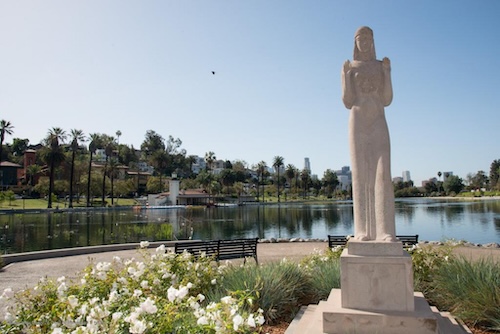
A vibrant, historic, and ever‑evolving Los Angeles community that blends old‑school charm, cultural creativity, and urban convenience.
Where Echo Park sits in L.A.
Echo Park lies just northwest of Downtown Los Angeles, bounded by a mix of hills, valleys, and major corridors. It sits near Hollywood and the 101, 2, and 5 freeways, and is flanked by Elysian Valley to the north/northeast, Elysian Park to the east, Chinatown and Downtown to the southeast, Westlake to the southwest, and Silver Lake to the northwest.
The neighborhood includes distinctive sub‑districts, most notably Angelino Heights and Elysian Heights, and is home to the iconic Echo Park Lake, a hub of both recreation and community identity.
A brief, rich history…
Origins and early development
Echo Park’s story begins with water and landscape. Echo Park Lake was created in 1868 as a drinking water reservoir, later landscaped into a park by 1892. Its name reportedly came from echoes heard during construction, and by the mid‑1890s the park and boathouse were completed.
By the late 1910s, the park area had already become a filming location for motion‑picture companies along what is now Glendale Boulevard, reflecting Echo Park’s early ties to the budding entertainment industry.
Transit, growth, and urban connection
A defining chapter in Echo Park’s growth was its connection to the Pacific Electric Railway and the famed Red Cars. These trolleys ran through Echo Park along the center of Glendale Boulevard, linking the area to a larger network that, at its peak, was the world’s most advanced electric‑rail system.
The arrival of streetcars made Echo Park more accessible, attracting residents, businesses, and creative communities. Over the decades, the neighborhood evolved from a mix of working‑class roots and hillside enclaves into a cultural crossroads of artists, musicians, and families.
Echo Park Lake through the decades
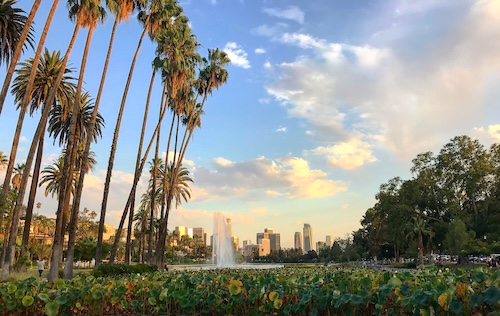
Echo Park Lake has seen highs and lows. By the early 2000s, it was identified as environmentally impaired, prompting a major cleanup and revitalization. The lake closed in summer 2011 for restoration and reopened on June 5, 2013, following a roughly $45 million renovation, marking a new era for this central landmark.
More recently, the lake and its surroundings became the focus of wider civic issues, including large homeless encampments in 2019–2021 and a highly publicized debate over fencing around the park in 2023. The lake’s management and role in the community continue to reflect broader conversations about urban space, safety, and public use.
What makes Echo Park different today
The feeling on the ground…
Echo Park is a unique blend of:
- Hillside streets and panoramic views in areas like Elysian Heights.
- Historic Victorian, Craftsman, and early 20th‑century homes in Angelino Heights and nearby pockets.
- Walkable commercial corridors, especially along Sunset and Glendale Boulevards, lined with restaurants, shops, performance venues, and cultural spaces.
- A strong creative and cultural pulse, embodied in music venues, independent film organizations, and artist‑run spaces.
It is both dean of historic L.A. neighborhoods and a hotbed of contemporary urban life, where long‑time residents, creatives, and newcomers mingle.
Architectural and district variety
Two sub‑districts stand out for their historical and cultural resonance:
Renowned for its Victorian‑era residences and historic streets.
A location repeatedly referenced in film and popular culture. For example, the 2018 film A Star Is Born features a character living in Angelino Heights, illustrating the area’s cinematic appeal.
Known since the 1910s as home to counter‑culture, artists, political radicals, and writers, creating a legacy of progressive community influence.
These areas remain vital threads in Echo Park’s fabric, offering preserved architectural gems, hillside vistas, and a strong sense of place.
Parks, recreation, and outdoor life…
Echo Park Lake
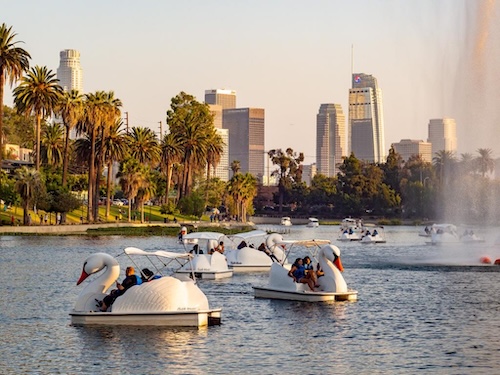
- A historical reservoir turned beloved urban oasis, now featuring a path, boating, and regular community events.
- Hosts seasonal activities, cultural gatherings, and everyday recreation for residents and visitors.
Nearby greenspaces
- Elysian Park to the east, one of L.A.’s oldest and largest parks.
- Vista Hermosa Natural Park, a short ride away, offers grassy open space with skyline views.
- Various smaller pocket parks and community spaces add to the neighborhood’s walkable, outdoor lifestyle.
Culture, nightlife, and food…
Echo Park’s nightlife and cultural scene is lively and diverse:
- Live music and performance venues around Sunset and Glendale, often showcasing local talent and touring acts.
- Eclectic dining that spans casual eateries, vintage cafes, vegan and vegetarian spots, and refined restaurants.
- Independent art and film organizations, Echo Park’s history as a filming locale and artistic hub continues with modern galleries, film centers, and creative studios.
- Valley‑to‑Downtown connectivity positions Echo Park as a crossroads where different scenes intersect, from East Los Angeles culture to Hollywood’s music and nightlife.
Transportation, connectivity, and lifestyle convenience
- Close to Downtown, Silver Lake, Chinatown, and Westlake making Echo Park a natural midpoint for various parts of the city.
- Major freeways nearby offer straightforward access to different regions of Los Angeles.
- Walkable main streets and short drives provide easy access to groceries, fitness, healthcare, entertainment, and schools.
A neighborhood that has grown in visibility among homebuyers and renters due to its central location, unique architecture, and lifestyle offerings.
Real estate and community character
Housing overview
- Historic single‑family homes and hillside properties, some of which have been beautifully restored, expanded, or modernized.
- Small multi‑family buildings and apartments, often older structures updated for modern living.
- Creative reuse of buildings for live‑work spaces, galleries, or small businesses.
Market appeal
Echo Park draws a wide mix of residents:
- Families who value community, schools, and nearby parks.
- Artists, designers, and creatives who appreciate the neighborhood’s cultural history and walkability.
- Professionals who need a central location with a strong identity, good transit access, and diverse amenities.
Ongoing evolution
Echo Park is known for change, new restaurants, pop‑up shops, public art, and cultural events continue to reshape the neighborhood while older buildings and traditions anchor its history.
Landmark sites and districts maintain the sense of continuity, even as the community adapts to new challenges and opportunities.
Fun facts and cultural notes…
- Echo Park appears in songs and popular media, reflecting its imprint on music and culture through decades. Its name and image have inspired songwriters, filmmakers, and musicians, underscoring its role as both inspiration and backdrop.
- Film and TV presence is ongoing, with the neighborhood and its iconic sites being featured in various productions across different eras.
- Community discussions around public space and safety—like the debates over Echo Park Lake fencing, show how Echo Park remains central to citywide conversations on urban living, equity, and access.
Who should consider Echo Park
Echo Park is best for people who want:
- Authentic Los Angeles history combined with a modern, creative lifestyle.
- A walkable, centrally located neighborhood that still feels distinct and human‑scale.
- Architecture with soul, from Victorian homes to mid‑century dwellings and contemporary remodels.
- Community engagement, neighbors who care about parks, culture, safety, and the future of their public spaces.
Echo Park is one of L.A.’s most compelling neighborhoods because it offers scenery, history, culture, and a very real sense of community, all within a stone’s throw of the city’s busiest, most creative districts.
Leave a Reply